

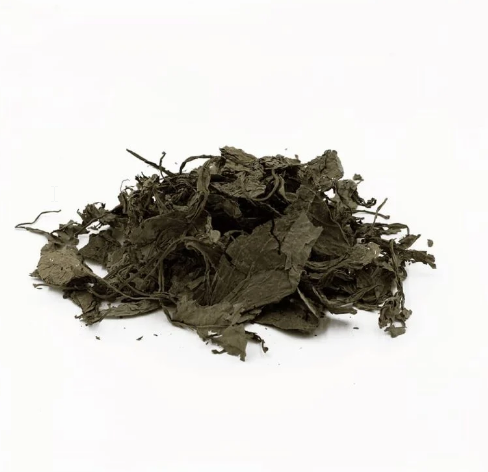
Most people encounter Salvia divinorum for the first time as a name attached to dried leaves or extracts. That can make it easy to forget something much more interesting from a horticultural point of view: before it becomes any processed botanical material, it is a living perennial plant with an unusual cultivation history.
For growers, collectors, and anyone interested in plant propagation, one of the most fascinating parts of Salvia divinorum is the importance of cuttings.
Many familiar garden plants are routinely started from seed. With Salvia divinorum, however, vegetative propagation has played a much more important role in maintaining cultivated plants. That changes how we should think about individual specimens. A cutting is not simply a smaller version of a plant waiting to grow larger. It represents a continuation of an existing genetic line.
Understanding that distinction helps explain why clonal lineage, parent plants, provenance, and careful plant identification matter so much with this species.
Table of Contents
- What does clonal lineage actually mean?
- Why cuttings are different from seedlings
- Why Salvia divinorum is closely associated with vegetative propagation
- Genetic continuity: the biggest advantage of a cutting
- Why parent-plant quality matters
- A cutting and an established plant are not the same thing
- Why provenance matters to botanical collectors
- Clonal propagation does not mean every plant will look identical
- Why genetic diversity still matters
- What to look for when researching Salvia divinorum cuttings
- What this species can teach growers about plant preservation
What Does Clonal Lineage Actually Mean?
The word “clone” sometimes sounds more complicated than it is.
In horticulture, a clone is simply a plant produced vegetatively from another plant rather than created through sexual reproduction from seed. The new plant carries essentially the same genetic makeup as the parent material from which it originated.
Think about taking a branch from an established plant, allowing that piece to develop its own root system, and eventually growing it as an independent specimen.
Physically, you now have two plants.
Genetically, however, the second plant represents a continuation of the first.
That relationship is called clonal lineage.
Growers use the same basic principle with many familiar plants. Grapevines, figs, rosemary, mint, houseplants, fruit cultivars, and countless ornamentals are regularly propagated vegetatively because growers want to preserve known characteristics.
With Salvia divinorum, that concept becomes particularly important because cultivated populations have historically relied heavily on vegetative propagation.
Why Cuttings Are Different From Seedlings
A seedling represents a new genetic combination.
When a plant reproduces sexually, genetic material from parent plants is recombined. Even seedlings from the same parents are not genetically identical siblings.
That is why two seedlings can differ in subtle ways.
They may show differences in vigor, leaf shape, growth rate, branching behavior, disease tolerance, environmental response, or countless other characteristics.
A cutting works differently.
When a cutting develops into an independent plant, it does not go through the same genetic reshuffling that occurs during seed production.
This makes vegetative propagation especially valuable when growers want to maintain a known plant line.
It also explains why the terms “seedling” and “cutting” should never be treated as interchangeable.
Both can eventually become mature plants, but biologically they begin through very different processes.
Why Salvia Divinorum Is Closely Associated With Vegetative Propagation
Salvia divinorum belongs to the Lamiaceae, or mint family, a large plant family that includes familiar genera such as mint, basil, rosemary, sage, and lavender.
Yet S. divinorum has a somewhat unusual reputation among cultivated plants because viable seed has historically been less central to its propagation than vegetative material.
That does not mean the species is biologically incapable of producing seed. It means that, in cultivation, growers have often depended much more heavily on cuttings to maintain plants and established lines.
Over time, this creates something like a living chain.
A mature plant produces vegetative material.
That material establishes as another plant.
The new plant matures and can continue the same lineage again.
Instead of every generation beginning with a genetically new seedling, the same genetic line can continue across many separately grown plants.
For someone interested only in owning a plant, this may sound like a technical detail.
For a botanical collector, it is much more significant.
Genetic Continuity: The Biggest Advantage of a Cutting
The clearest advantage of a cutting is predictability.
When a grower starts with a healthy parent plant that has known characteristics, vegetative propagation preserves that genetic identity.
This does not guarantee that every resulting plant will look exactly the same at every moment. Environment still plays an enormous role in plant development.
However, it removes one major variable: genetic recombination.
That makes clonal propagation useful for maintaining recognizable cultivated material over time.
Consider an established plant with a known growth habit. If it were reproduced entirely through seed, future plants could show greater genetic variation.
When that plant is propagated through cuttings, the underlying genetic line remains much more consistent.
This is the same reason horticulturists often propagate named fruit cultivars and ornamental varieties vegetatively. If a particular plant has characteristics worth preserving, cloning allows growers to continue that plant rather than simply hoping its seedlings reproduce the same traits.
Why Parent-Plant Quality Matters
Because a cutting represents a continuation of its parent, the quality and identity of that parent matter.
A cutting cannot be separated conceptually from the plant it came from.
This is why serious growers tend to care about questions such as:
Where did the parent plant originate?
Was the species correctly identified?
Was the parent plant healthy?
How long has that cultivated line been maintained?
Is there any information about its provenance?
These questions become particularly useful with plants that circulate mainly through vegetative propagation.
Someone evaluating Salvia Divinorum cuttings should therefore look beyond the size of the cutting itself. The botanical identity of the source plant, the condition of the material, and clear information about what is actually being offered are just as important.
That is a more useful way to evaluate vegetatively propagated plants than simply asking which specimen appears largest in a photograph.
A Cutting and an Established Plant Are Not the Same Thing
Another common source of confusion is the difference between a cutting and an established plant.
They belong to the same biological lineage, but they are at different developmental stages.
A cutting is plant material taken from a parent plant for vegetative propagation. Depending on how it is offered, it may be newly prepared, partially established, rooted, or further along in development.
An established plant has already progressed beyond that early propagation stage and developed a more independent root and shoot system.
For beginners, that distinction matters because the words are sometimes used too casually online.
Someone expecting a developed potted plant may be surprised to receive propagation material instead. Likewise, someone specifically looking for a cutting may not want to pay for a larger established specimen.
Clear botanical descriptions make that distinction obvious before anyone orders or exchanges plant material.
Why Provenance Matters to Botanical Collectors
Provenance simply means knowing where something came from.
In horticulture, provenance can tell us about a plant’s origin, cultivated line, previous grower, parent material, or history.
For common garden plants produced in enormous numbers from seed, individual provenance may not always receive much attention.
With clonally maintained plants, it becomes more interesting.
Imagine two specimens that look similar. One comes with clear information about the parent plant and how the line has been maintained. The other arrives with no species confirmation, no history, and no information beyond a handwritten label.
From a collector’s perspective, those are not necessarily equivalent plants.
Good provenance helps preserve knowledge alongside the plant itself.
That becomes particularly valuable when a species is uncommon in ordinary garden centers and much of its cultivated distribution occurs through exchanges between specialist growers and collectors.
Clonal Propagation Does Not Mean Every Plant Will Look Identical
This is one of the most useful concepts for newer growers to understand.
Genetically similar does not mean visually identical.
Put two genetically identical plants in different environments and they can develop quite differently.
Light intensity can influence leaf development and stem growth. Humidity can change how foliage behaves. Temperature, root conditions, nutrition, watering patterns, available space, and general plant stress can all influence appearance.
One specimen might develop broad leaves and long internodes while another from the same line grows more compactly.
That does not necessarily mean they are genetically different.
Botanists distinguish between genotype, the plant’s genetic makeup, and phenotype, the observable characteristics produced by genetics interacting with the environment.
This distinction is especially useful when comparing photographs online.
Two cuttings from the same clonal lineage can eventually look noticeably different if grown under different conditions.
Why Genetic Diversity Still Matters
Clonal continuity has obvious advantages, but there is another side to the story.
A population consisting largely of genetically similar material has less genetic diversity than a population regularly reproducing through genetically varied seedlings.
Diversity matters because it gives plant populations a wider range of characteristics.
Some individuals may tolerate heat better. Others may resist a particular disease more effectively. Still others may respond differently to changes in moisture or soil conditions.
Clonal propagation excels at preserving known genetics.
Sexual reproduction excels at creating new genetic combinations.
Neither idea is inherently better in every circumstance. They serve different biological roles.
Understanding this prevents a common misconception that cloning is simply an improved version of seed propagation. It is not. It is a different tool with different strengths.
For collectors, the value of clonal propagation lies primarily in continuity and preservation.
What to Look for When Researching Salvia Divinorum Cuttings
For someone unfamiliar with the species, online listings can initially feel confusing.
The most useful descriptions tend to be the clearest rather than the most promotional.
Look for correct use of the botanical name Salvia divinorum. The genus and species together matter because the genus Salvia contains hundreds of other species.
Check whether the seller clearly distinguishes a cutting from a rooted or established plant.
Look for photographs that actually show the plant material rather than relying entirely on generic stock imagery.
Descriptions should explain the form in which the material is supplied and provide enough information for the reader to understand what they are looking at.
Information about source plants or cultivated lineage can also be useful, particularly for collectors interested in maintaining correctly identified botanical material.
And because laws concerning Salvia divinorum differ between jurisdictions, prospective buyers should always check the rules that apply where they live before obtaining plants or other material.
What Salvia Divinorum Can Teach Growers About Plant Preservation
Perhaps the most interesting lesson from Salvia divinorum has little to do with the plant’s better-known reputation.
It is a lesson about continuity.
A cutting can carry a genetic line from one grower to another, one collection to another, and potentially across many years.
That is easy to overlook because vegetative propagation is so ordinary in gardening. People take cuttings from houseplants, herbs, vines, and shrubs every day.
But once you start thinking in terms of lineage, the process becomes much more interesting.
The small piece of stem on a propagation bench is not simply a future plant. It can also be a biological continuation of a plant that existed long before it.
That is why careful labeling, correct identification, healthy parent material, and provenance matter.
They preserve information alongside genetics.
Final Thoughts
Salvia divinorum is often introduced to newcomers through conversations that have very little to do with horticulture. Looking at the species through the eyes of a grower reveals a much richer botanical story.
Its long association with vegetative propagation makes cuttings particularly important. They help maintain known genetics, preserve cultivated lines, and give growers a way to continue established plants without introducing the genetic reshuffling that occurs through seed reproduction.
At the same time, cloning should not be misunderstood as producing plants that will always look identical. Genetics provide the foundation, but growing conditions still shape how each specimen develops.
For collectors and growers, the larger lesson is simple: a cutting has a history.
Knowing the parent plant, understanding clonal lineage, distinguishing cuttings from seedlings, and keeping accurate provenance all help preserve that history as the plant moves from one generation of cultivation to the next.
And for a species that many people are only beginning to understand as a living plant rather than simply a name encountered online, that botanical perspective is worth preserving.